History
A Sense of Place, A Story of People
Long before it had a name on a map, Yellowstone Country was home.

For more than 12,600 years — since the time of the Anzick Clovis burial near Wilsall, one of the oldest known burials in North America — Indigenous peoples lived in and traveled through this landscape. They hunted, fished, gathered plants and obsidian, and honored the deep cultural and spiritual ties they still hold to this place. Today, 27 tribal nations maintain ancestral connections to the Yellowstone region.
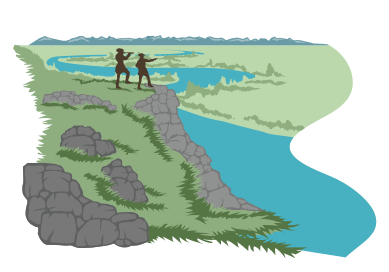
In 1805–1806, the Lewis and Clark Expedition passed through what is now Yellowstone Country, mapping rivers and mountains and recording some of the first written accounts of this area. You can still visit one of their campsites at Missouri Headwaters State Park .
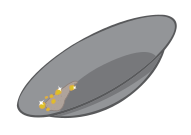
By the 1860s, miners and trappers were drawn here by the promise of gold in places like Cooke City, Red Lodge and Independence. Many stayed on, establishing farms and businesses that formed the backbone of new communities.
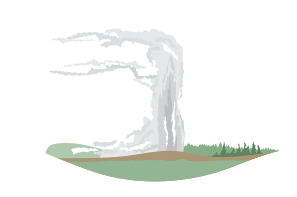
In 1872, Yellowstone was designated the first national park in the world, setting a global precedent for protecting wild places.

After Yellowstone became the first national park, the Northern Pacific Railroad reached Livingston, transforming it into a bustling gateway to the park and helping establish tourism as a lasting part of the region’s identity.

By 1900, more than six million sheep grazed the valleys of Yellowstone Country. Big Timber became one of the country’s top wool-shipping centers, and ranching and agriculture became a way of life.
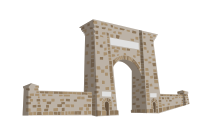
In 1903, President Theodore Roosevelt laid the cornerstone of the Roosevelt Arch in Gardiner, inscribed with the words: “For the benefit and enjoyment of the people.”
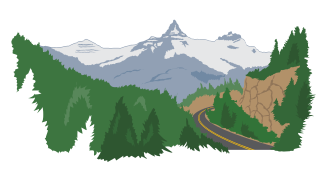
In 1936, the Beartooth Highway was completed, a high-altitude marvel that climbs to nearly 11,000 feet and winds through the Absaroka-Beartooth Wilderness. The region is home to more than 20 peaks over 12,000 feet, including Granite Peak, the highest in Montana.
Indigenous stewards, ranchers, artists, educators, entrepreneurs — Yellowstone Country has always drawn people who live with intention — people who care for the land, the stories and each other.
And now, you’re one of them.